
Key Takeaways
- Phoenus develops durable mobility products built through simple and accessible manufacturing techniques.
- The company aims to become a micro electric vehicle manufacturer serving the MENA region.
- Its future strategy centers on international assembly partnerships and distributed production hubs.
Overview
Phoenus is a Lebanese cleantech mobility company founded in 2008 and based in Byblos. The company designs and manufactures durable mobility products with a focus on simplicity, accessibility, and practical use. Its early work centered on children’s mobility solutions, while its longer-term ambition is to develop affordable micro electric vehicles designed for everyday utility.
The company was founded by Nicolas Abou Chaar, who serves as CEO and Technical Director.
Background
Before founding Phoenus, Abou Chaar worked in Germany in the automotive industry, including roles at Valeo and Visteon. His experience in industrial production led him to explore how simpler engineering approaches could allow mobility products to be manufactured with smaller teams and more flexible production methods.
Phoenus emerged from the idea that Lebanon could support small-scale manufacturing if products were designed with durability, simplicity, and accessible production techniques in mind.
Mission
Phoenus focuses on what it describes as robust mobility. Rather than emphasizing speed or complex engineering, the company prioritizes reliability, durability, and ease of production.
Its long-term goal is to position itself as a micro electric vehicle manufacturer in the MENA region, producing affordable mobility solutions that can be manufactured locally and adapted to practical uses such as agriculture or small-scale transport.

Products
Phoenus currently develops several mobility products designed primarily for children and educational environments. To name a few:
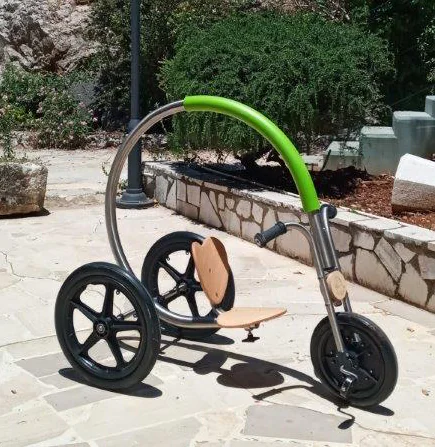
- Triclus — an ergonomic tricycle designed to be easily accessible and comfortable for children
- Les Dressiennes — balance bikes that help children develop riding skills without pedals
- Pilus — a small ladder designed to help toddlers learn stepping and climbing
Production relies on modern fabrication techniques such as laser cutting, allowing components to be manufactured efficiently without relying on highly specialized industrial equipment.
The production process remains intentionally simple: with a small team of five people, Phoenus can manufacture up to one unit per day, while larger orders allow production to accelerate through repeated fabrication cycles and parallel assembly.
The company is also conducting ongoing research and development in electric mobility, including experimentation with sodium-ion batteries, which offer advantages in safety, recyclability, and cost compared to lithium batteries.
Activities and Operations
Phoenus operates with a small core team supported by part-time collaborators. Its production philosophy focuses on minimizing manufacturing complexity while maintaining strong structural durability.
This approach allows the company to prototype and test new designs while maintaining flexibility in production.
Business Model
Phoenus generates revenue through transactional product sales, primarily through a B2B model.
Its main customers include:
- Schools
- Educational NGOs
- Playgrounds
The company is also developing a franchise-style assembly model, where partners in different countries assemble vehicles locally using Phoenus designs. This model aims to reduce shipping costs while creating local employment opportunities in each market.
Market and Reach
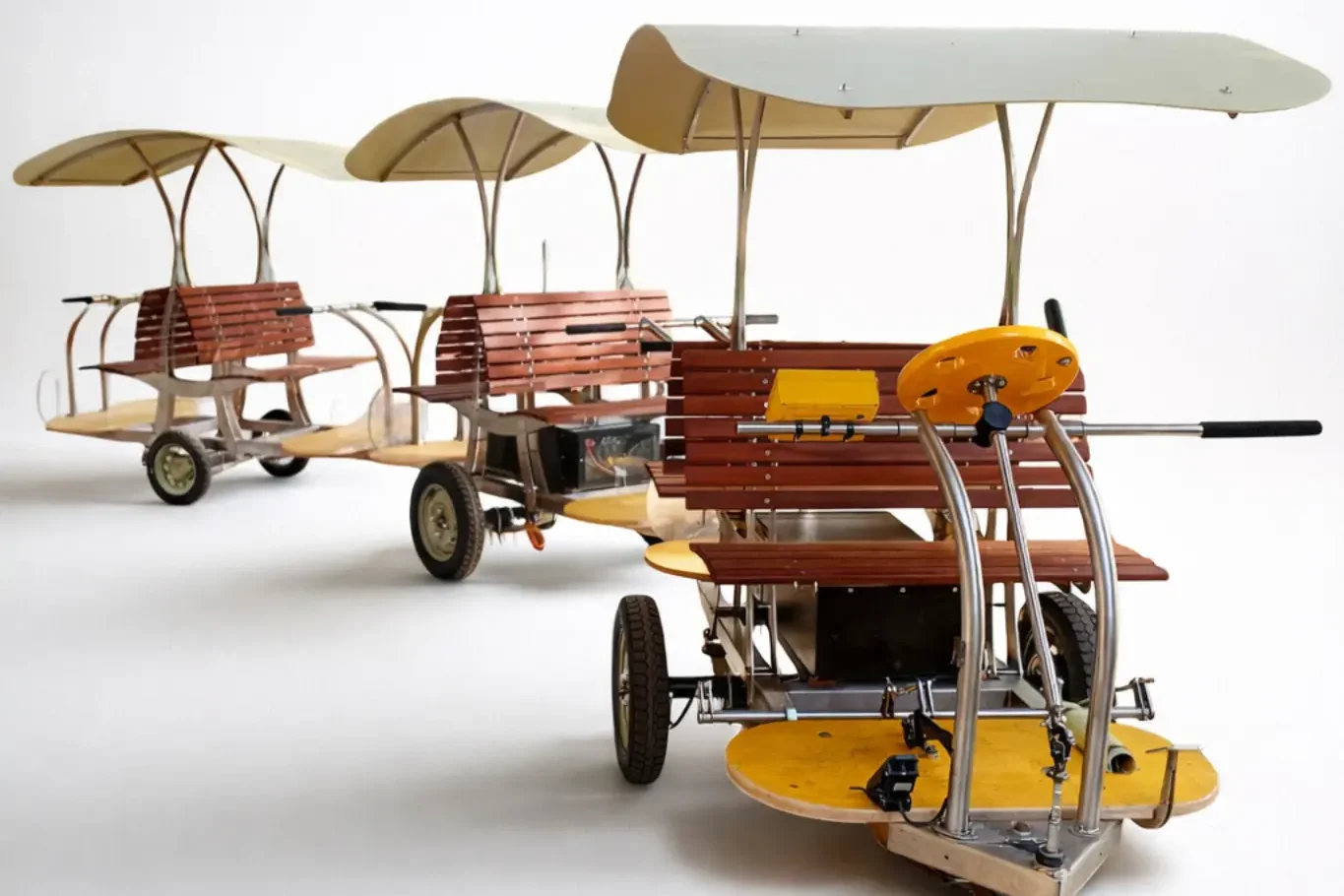
Phoenus operates within the cleantech mobility sector and targets international markets. The company has already completed exports, including the sale of a leisure electric train in Senegal capable of carrying twelve passengers.
Funding and Support
Phoenus has grown largely through bootstrapping. The company received a $24,000 research and development grant from Berytech, which supported the development of three prototypes. It has also participated in programs run by SmartESA.
Misconception
A common misunderstanding surrounding Phoenus is that its vehicles are imported from Europe or China. In reality, the products are designed and manufactured locally in Lebanon, reflecting the company’s broader goal of demonstrating that small-scale manufacturing can take place within the country.
Outlook
Phoenus is currently in an early traction stage. A recent partnership with an Egyptian company provides assembly capacity and distribution networks, particularly within agricultural markets, while Phoenus contributes the design expertise and technical know-how.
Over the next 6–12 months, the company aims to expand production through this partnership and test the viability of its franchise assembly model, with the possibility of replicating the structure in additional markets.